
Company Profile
We hear many excuses about why people don't recycle batteries – for example, they don't have a bin nearby or use batteries, recycling isn't done correctly in the country and a battery won't make a difference. However, we have 75.000 battery recycling points in the country, and anyone can go to www.afis.gr on our map and find the points closest to them.

In our daily lives, we constantly use batteries in our mobile phones, in our watches, in the remote control, in our headphones, in the kitchen scale etc., and research has shown that in a house, there are almost 100 batteries, of which approximately 20 are already finished.

Recycling in Greece may face several challenges, but AFIS operates effectively, even without state support. According to the European “polluter pays” regulation, companies that import or manufacture batteries in Greece are required either to organise their own EPR scheme (Alternative Management System) or to register with an existing one, fulfilling their financial obligations. Since portable batteries have a negative economic value, AFIS’s only income comes from the financial contributions of the obligated companies. AFIS then uses this income to cover all needs related to the proper management of portable battery waste (placement of free collection bins, collection, storage, and recycling).
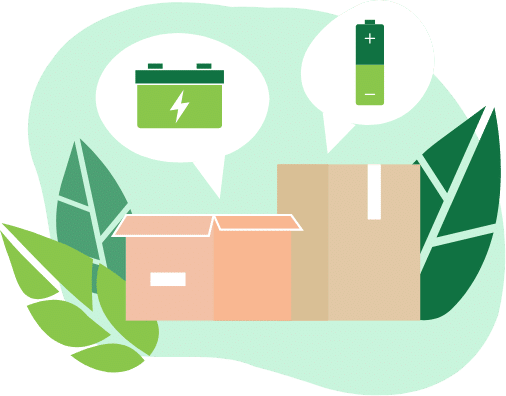
The batteries collected by AFIS are sent for recycling to facilities within Greece. However, highly hazardous batteries—such as lithium, nickel-cadmium, and nickel-metal hydride—are shipped abroad, where the appropriate infrastructure for their treatment exists.
By recycling batteries, we return valuable metals back into the production cycle, enabling the creation of new batteries as well as any other metal-based products, such as scissors and airplanes.

Using recycled metals saves energy and raw materials, while also reducing the volume of waste. In addition, battery recycling protects the environment, primarily from heavy metals. If batteries are not recycled and end up in mixed waste, they corrode and release the heavy metals they contain into the environment, posing a serious threat to human health and the ecosystem.
Furthermore, when batteries are disposed of improperly in landfills, the heavy metals contaminate the groundwater and there is a significant risk of fires caused by the release of toxic gases.
Recycling even a single battery can make a significant difference, because the most important aspect of recycling is forming the habit—making recycling a part of our daily lives, as this is the only way we truly help the environment. Let us not look for excuses when it comes to something that is entirely positive and so easy to do, such as recycling batteries at one of AFIS’s 75,000 collection points.