Health:
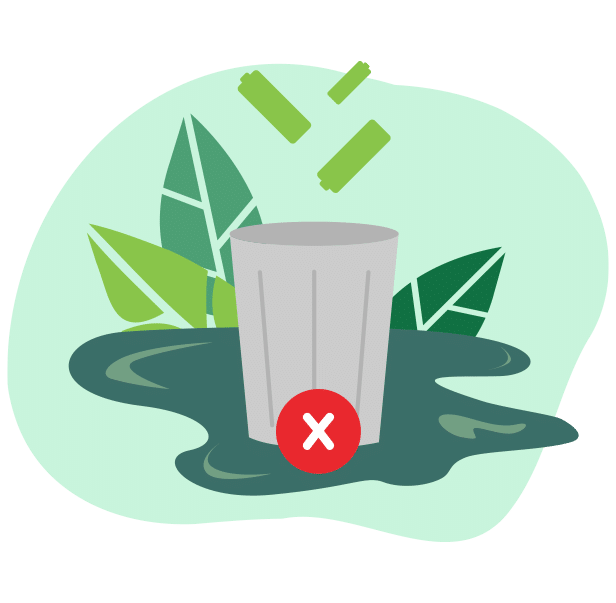
When batteries are not recycled, they usually end up in landfills, which often overflow. which often overflow, a large portion of the waste reaches the soil or water, polluting natural resources with hazardous materials. These harmful substances enter living organisms through water, air, and food, and cannot be metabolised or broken down. As a result, toxic substances accumulate significantly in organisms at the top of the food chain — including humans. This phenomenon is known as bioaccumulation, and it can lead to various health problems. In addition to heavy metals, batteries also contain corrosive acids, which can cause harm to the human body, especially to the eyes and skin.
Environment:
We live in an era of major technological advancements. However, the need for raw materials keeps increasing, and the risk of environmental destruction grows along with it.
Many of the metals we use daily are components of the Earth’s crust and not synthetically produced chemicals — which means they do not break down.
If these materials remain in the environment, they can cause habitat loss and affect local biodiversity.
For example, lithium batteries can cause fires that burn for long periods, releasing harmful gases that hinder efforts to combat climate change and intensify the climate crisis.
By recycling batteries, we prevent all of the above negative consequences of improper disposal, protecting nature, human health, and our collective future in the safest possible way.
Sustainability:
Recycling is a process that should now become part of our lives. In addition to protecting the environment from pollutants, another significant benefit is the reduction of waste of raw materials.
The European Union has already established relevant legislation to limit the reckless use of heavy metals: since 1/1/1993, the marketing of batteries with a quantity of mercury above 0.005% by weight has been prohibited, and the upper limits of heavy metals in water have been established, the atmosphere and the ground, as well as the relevant penalties for offenders. But the most important action was the legislation to introduce alternative management systems in all the countries of the European Union. The corresponding body in Greece for portable batteries is AFIS.
In addition, we recycle materials that can be reused back into the production stream. Metals, in particular, belong to a category of materials that can be recycled relatively easily.
Through various industrial methods, they can be separated and reused to create new products.
Compared to mining, the energy required to extract metals through recycling is significantly lower. In fact, it is estimated that up to 80% of the energy needed for primary extraction is saved for each recycled battery.